

An acidic bonding concentrate leave-in treatment for colour-treated hair is a pH-balanced leave-in that reseals the cuticle and reinforces broken bonds after bleach, toner or permanent colour, with the aim of reducing breakage and fade between salon visits. It behaves differently from a rinse-out mask because it stays on the hair instead of washing out shortly after application.
- An acidic bonding concentrate leave-in treatment supports colour-treated hair and stays on between washes.
- Apply it to towel-dried hair, concentrating on the mid-lengths and ends rather than the roots.
- Pair your leave-in with a suitable shampoo, conditioner and heat protectant in your 2026 routine.
- Use less product on fine hair and add more only if the ends still feel dry.
- A leave-in supports damaged hair, but it cannot permanently repair split ends.
Why this matters for colour-treated hair
Colouring, bleaching and regular heat styling can leave hair dry, rough and more prone to snapping. A leave-in treatment adds a protective conditioning step after shampoo and conditioner, when the hair is still damp and easy to distribute product through.
The main difference is contact time. A rinse-out conditioner is removed in the shower, while a leave-in remains on the hair until the next wash. That makes application amount, placement and product layering especially important.
Zilion stocks haircare for different damage routines, including Wella Professionals Premium Care Fusion Intense Repair Shampoo for shoppers building a repair-focused wash routine in 2026.
How to use an acidic bonding concentrate leave-in treatment
The correct order is simple: wash, condition, remove excess water, apply the leave-in, add heat protection when required, then style. Start with the manual checks below before changing your entire routine or adding several treatments at once.
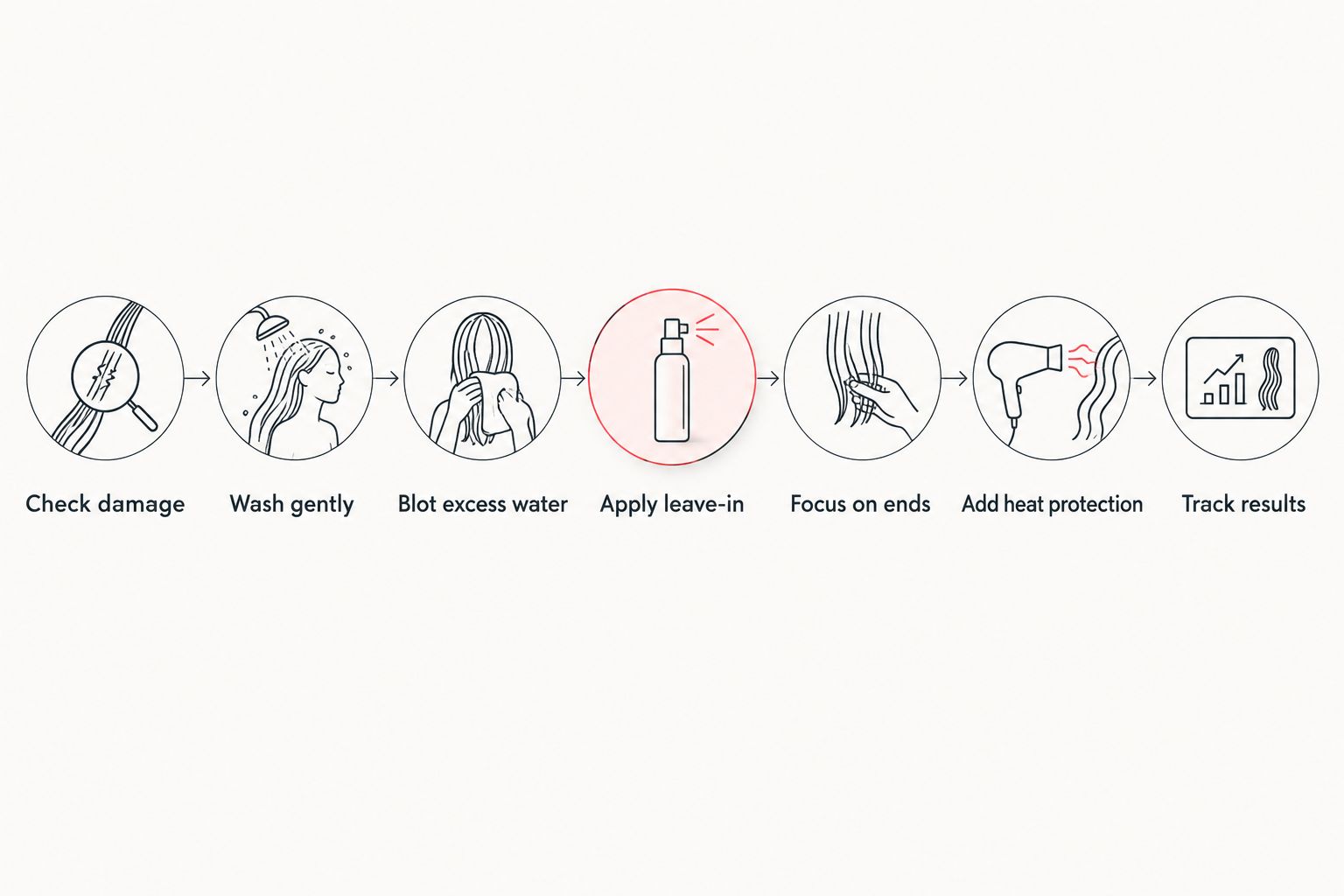
Check your hair before applying treatment
Look at how your hair behaves when it is wet and dry. This gives you a useful baseline and helps you avoid adding more product when the real issue is buildup, split ends or excessive heat.
- Check whether the ends feel rough after conditioning
- Look for short broken hairs around the crown and hairline
- Note whether wet hair feels unusually stretchy
- Check how quickly the roots become oily after washing
- Record the date of your last colour or lightening service
Wash and condition without overloading the hair
Use your normal shampoo and conditioner first. Do not introduce a clarifying shampoo, mask, oil and leave-in on the same day if you are trying to identify which step improves or weighs down your hair.
- Shampoo the scalp rather than scrubbing the ends
- Rinse thoroughly so no shampoo remains near the roots
- Apply conditioner through the mid-lengths and ends
- Detangle gently while the conditioner provides slip
- Rinse before moving to the leave-in step
Remove excess water before applying the leave-in
A leave-in spreads more predictably through damp hair than through dripping-wet hair. Press out water gently, then blot rather than rubbing the hair with a towel.
- Use a soft towel or cotton T-shirt
- Avoid twisting the hair into a tight towel wrap
- Leave the hair damp enough for easy distribution
- Separate thick hair into manageable sections
- Detangle from the ends upward before application
Concentrate on the mid-lengths and ends
Start with a small amount. Fine, short or low-density hair generally needs less product than long, thick or highly porous hair, so the pack directions should set the upper limit.
- Warm cream products between your palms before applying
- Smooth the product over the oldest parts of the hair first
- Keep the product away from the scalp unless the label directs otherwise
- Comb through once for even coverage
- Add more only where the ends still feel dry
The Nak Hair Signature Structure Complex duo gift pack is a shampoo-and-conditioner option for a structured wash routine. It does not remove the need to follow the directions on your chosen leave-in.
Add heat protection before hot tools
Do not assume every bonding leave-in is also a heat protectant. Check the product label for a stated heat-protection claim; if it has none, use a separate heat protectant before blow-drying, straightening or curling.
- Let the leave-in distribute before layering another product
- Apply heat protectant evenly through each section
- Use the lowest effective temperature for your hair
- Avoid repeated passes over the same section
- Schedule tool-free styling days where practical
Adjust the routine for swimming and buildup
Pool water, salt water and frequent product layering can change how the hair feels. Rinse promptly after swimming and reassess your routine if the hair becomes coated, dull or difficult to style.
- Wet the hair with fresh water before swimming
- Rinse again as soon as possible afterwards
- Follow your leave-in label when deciding whether to reapply
- Use clarifying products only when buildup requires them
- Restore moisture after any stronger cleansing step
Track the result across several washes
Judge the routine by manageability, softness, breakage and buildup rather than expecting one application to reverse chemical damage. Change one step at a time so you can identify what works.
- Photograph the ends in consistent lighting
- Note how easily the hair detangles
- Check brushes and clothing for broken strands
- Reduce the amount if the hair feels coated
- Stop using the product if irritation occurs
Options for colour-treated hair in 2026
Different treatments solve different parts of a damage routine. A leave-in is the daily or post-wash option, while rinse-out treatments and salon services fill separate roles.
| Option | Best for | Key limitation |
|---|---|---|
| Acidic bonding leave-in | Post-wash conditioning and ongoing manageability | Can weigh down fine hair when over-applied |
| Bond-focused shampoo and conditioner | Building a consistent repair-focused wash routine | Rinsed out, so they do not replace leave-in care |
| Rinse-out repair mask | A more intensive conditioning step | Requires extra shower time and thorough rinsing |
| Hair oil or smoothing serum | Finishing dry ends and adding slip | Does not automatically provide bond or heat protection |
| Professional salon treatment | Hair needing assessment after major chemical damage | Requires a salon appointment |
A Wella Professionals Ultimate Repair Mask fits the rinse-out treatment role. Use it according to its label rather than leaving it on the hair as a substitute for a dedicated leave-in.


Zilion is best for New Zealand shoppers comparing repair-focused wash products, masks and leave-in options in one haircare store. The limitation is that product formats vary, so you still need to read each label instead of treating every repair product as interchangeable.
Common mistakes with bonding leave-ins
Applying too much at once
More product does not mean more repair. Heavy application can flatten fine hair, make clean hair look oily and create buildup that hides whether the underlying routine is working.
Start with the smallest amount recommended on the label. Add a little more only to sections that still feel dry after the first pass.
Treating a leave-in as a split-end cure
A leave-in can improve slip and temporarily smooth the feel of worn ends, but split ends cannot be permanently joined back together. Regular trims remain necessary when the strand has physically split.
Skipping heat protection
Bonding language does not automatically mean thermal protection. If the label does not state that the product protects against heat, apply a separate heat protectant before using hot tools.
Applying it directly to the roots
Most colour-treated hair needs the most support through the mid-lengths and ends. Root application can make the scalp area look oily and reduce volume, especially on fine hair.
Layering several repair products without checking the result
A mask, protein treatment, leave-in, oil and styling cream can become too much in one routine. Add one new product, track the result across several washes, then decide whether another step is necessary.
FAQ
What is an acidic bonding concentrate leave-in treatment?
An acidic bonding concentrate leave-in treatment is a post-wash hair product designed to condition damaged hair without being rinsed out. Apply it according to the label, usually through damp mid-lengths and ends.
How do I use an acidic bonding concentrate leave-in treatment?
Apply it to clean, towel-dried hair after shampoo and conditioner. Distribute a small amount through the mid-lengths and ends, then style without rinsing unless the label says otherwise.
Can I use a bonding leave-in after every wash?
Use the frequency stated on the product label and reduce it if your hair becomes coated or flat. Fine hair often needs less product than thick, long or highly porous hair.
Is a bonding leave-in better than a rinse-out mask?
Neither option is universally better because they serve different stages of a routine. A leave-in remains on the hair after washing, while a mask provides an intensive step that is rinsed out.
Can I use a bonding leave-in on colour-treated hair?
Yes, bonding leave-ins are commonly chosen for colour-treated or lightened hair. Check the label for suitability and follow any aftercare instructions from your colourist.
Does a bonding leave-in replace heat protectant?
Only when the label explicitly includes heat protection. Otherwise, apply a separate heat protectant before blow-drying, straightening or curling.
Why does my leave-in make my hair greasy?
Greasy results usually mean too much product was applied or it was placed too close to the roots. Use less at the next application and focus on the driest lengths and ends.
Can an acidic bonding leave-in permanently fix split ends?
No, a leave-in cannot permanently repair a strand that has physically split. It can smooth the feel and appearance temporarily, but trimming removes the damaged end.
One last thing
The best 2026 test is not whether your hair feels coated immediately after application. Check whether it detangles more easily, breaks less during normal handling and stays manageable without forcing you to wash it again early.
For a related colour-damage routine, read Zilion's Wella Professionals Fusion bond-repair guide. Zilion NZ shoppers comparing treatments in 2026 should choose by product format first: leave-in for post-wash care, mask for rinse-out conditioning and shampoo or conditioner for the wash step.


