

For an even pastel pink with crazy color candy floss, start with a light, even base, test the shade on a hidden strand, then apply colour in small sections until every strand is coated. Follow the product label for preparation, processing and rinsing; leaving patchy areas or uneven warmth in the base makes an even result harder to achieve. If your hair is dark, Candy Floss alone will not create a pale pastel finish.
- Crazy Color Candy Floss is best for an even pastel pink on a light, consistent base.
- Strand-test before colouring your whole head; yellow or darker patches can change the visible result.
- For even application, divide hair into small sections and coat each strand thoroughly.
- Follow the product label for processing and rinsing rather than guessing a time.
How do you get an even pastel pink with crazy color candy floss?
Match the base before you apply the pink. If one area is pale blonde and another is noticeably darker or warmer, applying the same shade across both does not make them identical. Check your hair in natural light, including underneath and at the back, before deciding whether to colour it at home.
Then test Candy Floss on a hidden strand, following the current product directions. Let the strand dry before judging it: wet hair can make the colour look different. If the test looks too warm, too faint or uneven, fix the base or reconsider the shade before covering your whole head.
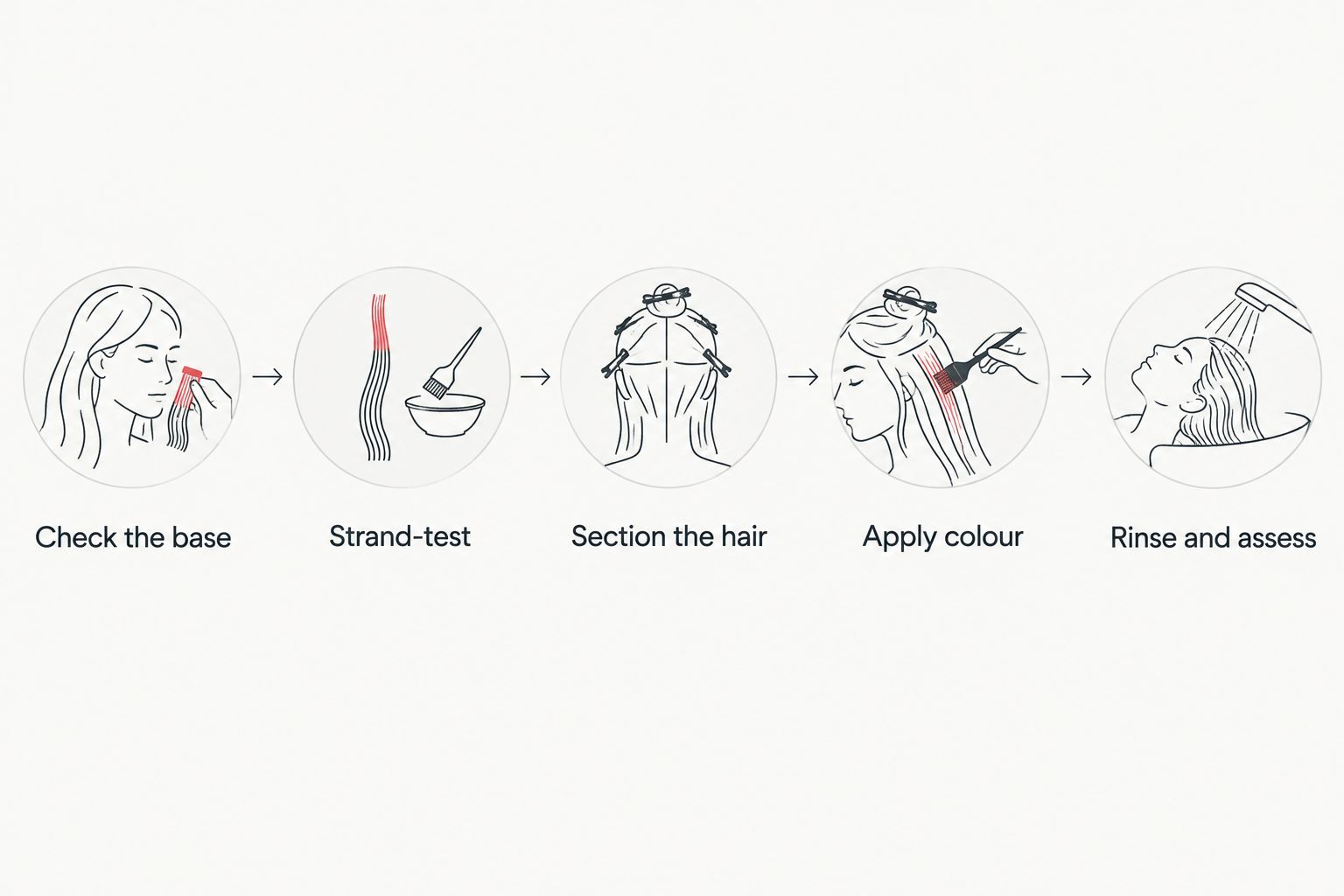
- Check the base. Look for darker roots, yellow bands, previously coloured lengths and unusually porous ends.
- Strand-test. Use hair that represents the area you want to colour, not only the lightest piece near your face.
- Section the hair. Separate it into manageable panels so you can reach the roots, underside and back.
- Apply colour. Work through each panel and check for uncoated strands before moving on.
- Rinse and assess. Follow the label, dry the hair, then look at the result in natural light before deciding on a touch-up.
The order matters. A neat application cannot fully hide a visibly uneven starting colour, while a consistent base still needs thorough coverage. For more on the application stage, read Zilion’s guide to applying semi-permanent hair colour at home.
Why this matters for NZ shoppers in 2026
Zilion sells hair colour and care products to New Zealand shoppers, but the deciding factor here is your starting hair, not the number of products in your basket. Check it before you buy another shade or plan a full-head application. A pastel result asks more of the base than a deeper colour because differences in lightness remain easy to see.
Take a photo of your dry hair in daylight and compare the roots, mid-lengths and ends. Indoor lighting can hide a warm band or make pale sections look more alike than they are. If a section has already been lightened or coloured, treat its strand-test result as useful evidence for that section only; the rest of your hair can respond differently.
In 2026, the practical buying question is not just whether you like the colour on a product image. It is whether your current base is close enough to the finish you want. If you cannot tell, pause before applying colour everywhere.
What starting hair colour works for pastel pink?
A light, even starting colour gives Candy Floss the clearest route to a soft pink result. Darker hair has less visible contrast for a pale shade, and yellow or copper tones underneath can affect how that shade appears. The table is a decision guide, not a promise of how your hair will turn out.
| Starting hair | Likely challenge | Best next move |
|---|---|---|
| Even, pale blonde | Application gaps can still show | Strand-test, then apply in small sections |
| Pale blonde with yellow patches | Pink can look different across the patches | Test a warm patch and a lighter patch separately |
| Dark blonde or light brown | Pastel pink can be hard to see clearly | Test before buying colour for a full-head result |
| Dark brown or black | Candy Floss alone will not produce a pale pink base | Seek professional advice before attempting to lighten hair |
| Previously coloured hair | Old colour and uneven porosity can alter the finish | Test representative sections, especially the ends |
Pastel pink is a base-and-application result, not a shade-name guarantee. If your strand tests look different across your head, expect that difference to remain visible after a full application. Do not try to solve a dark section by simply coating it more heavily; first address why the base differs.
Lightening is a separate chemical process, not an extra step to improvise during colouring. If you are considering it, read the directions for the products involved and seek professional help when your hair has previous colour, visible damage or an uneven starting point. The safest next move is sometimes to change the colour goal rather than force the hair to match a pastel reference.
Why does crazy color candy floss turn out uneven?
Several things can create a patchy pink, even when you use the same shade throughout:
- Uneven lightness: a darker root or band shows less of a pale colour than lighter lengths.
- Warmth in the base: yellow or copper sections can change the visible pink.
- Missed hair: thick sections make it easy to colour the surface while leaving strands underneath bare.
- Different colour histories: previously dyed ends and untouched roots do not necessarily take colour alike.
- Different hair condition: areas that feel drier or more porous deserve their own strand test.
- A rushed assessment: judge the finished colour on dry hair in consistent light, not while rinsing.
Find the cause before adding more colour. If the patch matches a darker band in your starting hair, another pass with Candy Floss does not make that band pale. If it is a missed section on an otherwise even base, a careful touch-up is a more targeted response.
How should you apply the colour without missing patches?
Set up a mirror that lets you inspect the back of your head, keep each section separate and work in an order you can repeat. Start where your strand tests tell you coverage needs the most attention, while following any application order on the product label. Do not rely on the colour you can see on the outer layer; open each section and check the strands beneath it.
As you apply, keep a clear boundary between coated and uncoated hair. Move through one manageable panel at a time, then inspect the hairline, around the ears, the crown and the underside. Those are easy areas to miss when you are applying colour to yourself. Use gloves and follow the product’s instructions for protecting skin and surfaces.
A second mirror or another person can help you check coverage at the back. That is a visibility fix, not a reason to add extra processing time. Once application is complete, follow the label’s directions and assess the dry result before touching up any area.
Should you choose Candy Floss or a pink colour refresher?
Choose by the job you need done. Candy Floss is the shade in this guide; a pink colour mask or tinted styling product serves a different role in a colour routine. Check each product’s current directions rather than assuming they are interchangeable.
| Option | Best for | Advantage | Limitation |
|---|---|---|---|
| Crazy Color Candy Floss | Creating a pastel pink look on a suitable base | Puts the shade choice first | Cannot make a dark or uneven base pale and even |
| Osmo Pink Soda Colour Enhancing Mask, 400ml | Considering a pink colour-enhancing mask for upkeep | Gives you a colour-care option | Do not assume its result matches Candy Floss; strand-test |
| Milk Shake Coloured Whipped Cream Light Pink, 100ml | Considering a light-pink tinted styling option | Offers a different way to add visible pink | Not a substitute for preparing an even base |
Zilion is best for NZ shoppers comparing pink colour and upkeep options in one store, but no product on this list corrects an uneven starting base by itself. Choose the shade you want first. Then decide whether you need a separate product to refresh the look later, checking how that product is meant to be used.
How do you keep pastel pink looking even?
Keep the same distinction you used during application: fading across otherwise even hair is different from an uncoloured patch or a darker band. Look at the hair dry in daylight before choosing a fix. If the pink has faded fairly evenly, a product intended to refresh pink is a more relevant option than treating the hair as though the first application failed.
Handle coloured hair according to the directions for your chosen products. When comparing shampoos and conditioners, check whether they are presented as suitable for coloured hair and follow the individual label. A colour-care routine helps you manage the shade, but it does not erase differences already present underneath it.
Take a fresh photo when you like the result. For your next application, compare the new growth and faded lengths with that photo rather than assuming the whole head needs the same treatment. Roots and ends can have different starting colours by then, so repeat the strand test where the base has changed.
If you swim or spend time at the beach in New Zealand, reassess the colour after washing and drying your hair before adding more pigment. The useful question is where the difference sits: all over, only at the ends, or along a pre-existing band. Match the response to what you can actually see.
Can you put Candy Floss on dark hair?
Candy Floss alone will not give dark hair an even, pale pastel pink finish. Test a hidden strand if you want to see what is visible on your own hair; do not assume a product photo shows the result on a dark base. If pale pink is the goal, get advice before lightening previously coloured or damaged hair.
Can you fix a patchy result by applying more pink?
More pink is appropriate only when you have identified an application gap on a suitably light base. It will not make a dark band as pale as the hair beside it. Check the dry result, compare it with your starting colour and strand-test the area before doing another full-head application.
Should you test the roots and ends separately?
Test the roots and ends separately when they differ in lightness, previous colour or condition. A test on the palest end tells you little about a darker root. Choose hidden strands that represent the differences you can see across your head.
FAQ
How do I get an even pastel pink with crazy color candy floss?
Start with a light, consistent base, strand-test representative areas and coat small sections thoroughly. Follow the current product label for processing and rinsing.
Will Crazy Color Candy Floss make brown hair pastel pink?
Candy Floss alone will not turn brown hair into an even pale pastel pink. Test a hidden strand to see the visible result on your own starting colour.
Why does pastel pink look stronger on my ends?
Your ends can differ from your roots in lightness, previous colour or condition. Test both areas separately before deciding whether either needs a touch-up.
Can I apply Candy Floss over yellow blonde hair?
You can strand-test Candy Floss on yellow blonde hair, but the warmth can affect the visible pink. Test a yellow section and a paler section separately if your blonde is uneven.
How long should I leave Candy Floss in my hair?
Follow the processing directions on the current Candy Floss product label. Do not extend the time to try to correct a dark or missed section.
Should I apply more colour to a patchy area?
Apply more colour only after identifying whether the patch is missed hair or a different starting base. Extra colour does not lighten a dark band.
Is a pink colour mask the same as Candy Floss?
No; choose a pink colour mask for its stated colour-enhancing use and check its directions. Do not assume it produces the same finish as Candy Floss.
One last thing
Before you colour everything, test the least promising section, not just the palest strand. That gives you a more useful answer about whether the whole result can look even. Zilion’s pink hair-colour options are easier to choose once you know what your roots, lengths and ends actually do with the shade.


