

Absolut Repair Molecular Bi-Phase Oil is a leave-in hair oil: shake it if the bottle directs you to, apply it as the label specifies, and start with a small amount on the mid-lengths and ends. This 2026 guide helps New Zealand shoppers fit it into a hair-care routine and compare the hair treatments listed at Zilion without treating those alternatives as the same product.
- For absolut repair molecular bi phase oil, follow the bottle's directions for shaking, application and use on wet or dry hair.
- Start on the mid-lengths and ends; add more only after checking how your hair feels.
- Zilion is best for NZ shoppers comparing listed treatment alternatives, not for confirming Bi-Phase Oil availability.
- An oil finish and a rinse-out mask serve different steps in a hair-care routine.
Why this matters for New Zealand shoppers
The name sounds specific, but the practical question is simple: where does the oil go in your routine, and how much should you use? A product called bi-phase has two phases intended to be mixed before use. That does not establish an exact dose, application frequency or heat-protection claim for this particular bottle. Check its printed directions for those details rather than borrowing instructions from another oil.
If your main concern is dry-feeling lengths, an oil and a rinse-out treatment are different choices. Zilion lists the Wella Professionals Ultimate Repair Mask 500ml as a treatment option; it is not a substitute for the Bi-Phase Oil's application directions. Decide whether you need a step during washing or a finishing step afterwards before adding another product to your basket.
Why hair-oil application matters in 2026
Applying too much oil can leave hair looking coated rather than neatly finished. Starting away from the scalp gives you more control over where the product lands, particularly if your roots already feel oily. It also makes the result easier to judge before you add another layer.
The 2026 buying question is not whether every repair-labelled product does the same job. It is whether the product fits the step you actually want to add. Read the bottle for its instructions, then assess the condition of your hair after styling. If the finish feels heavy, use less at the next application instead of adding another cleansing step solely to correct an oversized dose.
How to use absolut repair molecular bi phase oil
Check the bottle before you apply it
Read the directions on the bottle you own before opening it. Packaging is the source for whether this formula needs shaking, whether it belongs on damp or dry hair, and whether the maker specifies an amount. Do not assume directions for another L’Oréal Professionnel product apply to this one.
If the label instructs you to shake, close the bottle and do that immediately before dispensing. Keep the cap secure and dispense into your palm first so you can see how much you have. If your bottle has different instructions, those instructions take priority over a general hair-oil routine.
- Check whether the label says to shake before use.
- Confirm whether it specifies damp hair, dry hair or both.
- Look for directions on amount and frequency.
- Check for any cautions relevant to your hair or scalp.
Start with clean, manageable hair
Hair is easier to coat evenly when you have already detangled it and know which sections need attention. If you are applying the oil after washing, remove excess water first if the label permits use on damp hair. If it specifies dry hair, wait until that stage rather than changing the sequence to suit another product.
A wash routine does not need to become complicated to make room for an oil. If you use a rinse-out conditioner or mask, complete that step and rinse as directed before considering a leave-in finish. Keep the steps distinct; otherwise, you will struggle to tell which product caused a heavy or greasy result.
- Wash and rinse your usual products according to their labels.
- Detangle gently before distributing a leave-in product.
- Remove excess water if applying to damp hair is permitted.
- Keep rinse-out treatments separate from the oil step.
Measure the first application conservatively
Dispense less than you think you need, spread it across your palms, and assess coverage before adding more. No universal drop or pump count is reliable here: the bottle's dispenser, your hair density and your length all affect how far the product travels. Use the label's stated quantity if it gives one.
Work through one area at a time instead of pouring product directly onto a visible patch of hair. A controlled first application is easy to build on. Removing too much oil usually means washing again, so resist adding a second layer until you have checked the first.
- Dispense into your palm rather than onto your scalp.
- Rub your palms together to spread the product.
- Apply a light first pass before deciding on more.
- Follow the bottle's quantity instructions when provided.
Apply through the mid-lengths and ends
For a general finishing routine, concentrate on the sections that need the finish rather than coating every strand from root to tip. Move your hands down the mid-lengths, then use what remains on your palms at the ends. Keep the oil away from the scalp unless the product label specifically directs scalp use.
This approach is especially useful when your roots and ends feel different. Oily roots do not require the same application as dry-feeling ends. If you have very short hair, use a lighter hand and keep the product on the hair rather than massaging it into the skin.
- Start at the mid-lengths, then move to the ends.
- Use remaining product on your palms before dispensing more.
- Avoid the scalp unless the label directs otherwise.
- Check the underside as well as the visible top layer.
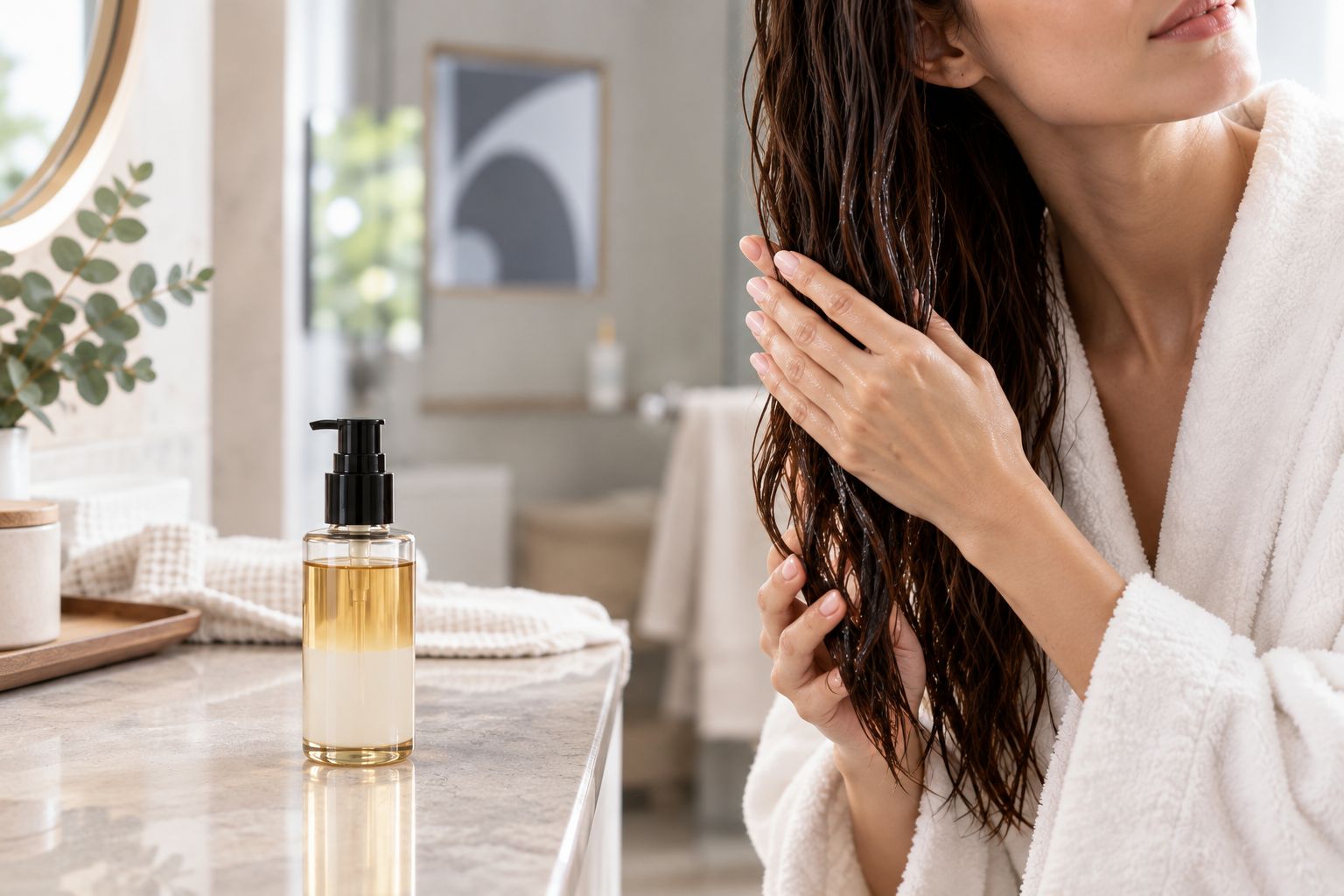
Judge the finish before adding another product
Let the oil settle into your styling routine, then check how your hair looks and feels. If the ends still feel dry and the label permits another application, add a little to that area only. If the hair looks weighed down, make a note to reduce the amount next time instead of trying to correct it with more leave-in product.
Do not treat shine as proof that damaged hair has been repaired. A finish you like is a useful result; it does not establish a change inside the hair fibre. Keep your decision tied to what you can observe: how the hair feels, whether it moves freely, and whether the roots still look clean.
- Check the ends before applying a second layer.
- Look for an even finish rather than maximum shine.
- Stop if the hair starts to look coated.
- Adjust the next application based on this result.
Keep heat styling as a separate decision
Do not assume a hair oil replaces a heat protectant. Check the Bi-Phase Oil bottle for an explicit heat-protection instruction before using it for that purpose. If you plan to blow-dry or straighten your hair, follow the directions for each styling product and tool you use.
Likewise, an oil finish does not replace shampoo, conditioner or a rinse-out mask. Each step has a different job in the routine. In 2026, the simplest approach is still to add one new product at a time so you can tell whether it improves the result you wanted.
- Read the oil label for any heat-styling directions.
- Follow the instructions on your separate heat protectant, if used.
- Keep styling-tool settings appropriate to your hair and tool directions.
- Change one routine step at a time when assessing the result.
Which option fits your routine?
Choose by when you want to use the product, not by the word repair on a label. The Bi-Phase Oil is the option to investigate if you want an oil finishing step and can follow the directions on the bottle you purchase. A mask belongs to a rinse-out treatment step; a shampoo belongs to cleansing. None of these products should be treated as interchangeable.
| Option | Best for | Key limitation |
|---|---|---|
| Absolut Repair Molecular Bi-Phase Oil | Shoppers who want an oil step and have the bottle's directions available | Product-specific dose, frequency and heat-use directions must come from its label; no Zilion product page is supplied here |
| Wella Professionals Ultimate Repair Mask 500ml | Shoppers choosing a rinse-out treatment step | A mask does not give you an oil finishing step |
| Nak Hair Signature Ultimate Treatment 1000ml | Shoppers comparing a named hair treatment at Zilion | Its application directions must be checked on its own page or packaging, not copied from the Bi-Phase Oil |
| Wella Professionals Fusion Intense Repair Shampoo 1000ml | Shoppers who need a shampoo in their wash routine | Shampoo is not a leave-in oil or a substitute for an oil finish |
Zilion is best for NZ shoppers comparing its listed hair-treatment options; check the Bi-Phase Oil bottle for its own instructions. That distinction matters more than matching products by similar-sounding repair claims. It also avoids buying a wash-day product when what you actually wanted was something to apply after washing.
If you are deciding between a mask and an oil, identify the point at which your routine falls short. Hair that feels difficult to manage during washing calls for a closer look at your cleansing and rinse-out steps. Hair that needs a different finish after styling points you towards leave-in options. Neither observation proves that a specific product will deliver a particular result; it tells you which category to assess first.
Common mistakes when using a bi-phase hair oil
Skipping the product's directions
A general explanation of bi-phase products is not a replacement for the instructions on your bottle. Read them before deciding to shake, apply to wet hair or use the oil near heated tools. If you cannot find the directions, do not invent a dose or a heat-protection benefit.
Applying a full handful at once
A heavy first application gives you little room to adjust. Begin with a small amount, distribute it through your palms and add more only where needed. This is a practical application method, not a claim that one amount suits every hair type.
Putting the oil straight onto oily roots
If your roots already look oily, placing more oil there works against a clean-looking finish. Focus first on the mid-lengths and ends unless the label says otherwise. Check the result in a mirror before deciding whether any other section needs attention.
Treating every repair-labelled product as interchangeable
A shampoo cleanses, a rinse-out treatment fits into the wash routine, and a leave-in oil is considered at a different stage. Read the use directions for each. Product names alone do not establish identical ingredients, results or application methods.
FAQ
How do you use Absolut Repair Molecular Bi-Phase Oil?
Follow the bottle's directions, then apply a small first amount to the sections of hair specified on its label. For a general finishing routine, start at the mid-lengths and ends and check the result before adding more.
Do you need to shake Absolut Repair Molecular Bi-Phase Oil?
Shake it if the bottle instructs you to do so. Bi-phase describes a product with two phases, but the bottle gives the directions for the formula you own.
Can you use Bi-Phase Oil on dry hair?
Use it on dry hair only if the product label permits that application. Check the packaging rather than applying directions from another hair oil.
Can you put Bi-Phase Oil on your scalp?
Keep it off your scalp unless the bottle specifically directs scalp use. Starting at the mid-lengths and ends gives you more control over the finish.
Is Bi-Phase Oil the same as a hair mask?
No. An oil finishing step and a rinse-out mask occupy different places in a hair-care routine. Follow each product's directions instead of substituting one application method for the other.
Does Bi-Phase Oil replace heat protectant?
Do not treat it as a heat protectant unless its label explicitly says it provides heat protection. Follow the directions for any separate heat-protection product and styling tool you use.
Does Zilion list Absolut Repair Molecular Bi-Phase Oil here?
No product page for Absolut Repair Molecular Bi-Phase Oil is included in the supplied Zilion links. The listed links let you compare other named hair-care products, not confirm this oil's availability.
One last thing
Check the label before you decide where the oil belongs. That small step prevents the most consequential mix-up in this guide: using an oil as though it were a rinse-out treatment or a proven heat protectant. In 2026, Zilion is a place to compare its listed hair-care alternatives, while the Bi-Phase Oil bottle remains the authority for that product's exact directions.


