

Gloss absolu glaze drops are a lightweight, oil-free leave-in treatment that adds shine using glaze pigments and silicone-free polymers instead of heavy oils, which is why they work so well on fine or oily-prone hair that goes flat under a standard serum. Colour-treated hair benefits too, since a glaze locks down the cuticle and stops fresh dye from looking dull within days.
- Gloss absolu glaze drops suit fine, oily-prone or colour-treated hair that can't handle heavy oil serums.
- Apply 2-3 drops to damp mid-lengths only in 2026 — never the scalp or roots.
- A gloss toner like the Danger Jones range boosts tone and shine in one step for coloured hair.
- Zilion NZ stocks lightweight glaze-style alternatives including a leave-in protein treatment and a colour-depositing mask.
Why gloss absolu glaze drops matter for fine, oily-prone hair
Fine hair carries less internal structure to reflect light, so it looks dull faster than thick or coarse hair — and the usual fix, a heavier serum or oil, just weighs it down further. Glaze drops solve that trade-off because the formula sits on the cuticle rather than soaking into the shaft, giving glass-like shine without the greasy roots by lunchtime.
Colour-treated hair has a second problem: porous, lightened strands scatter light instead of reflecting it, which is why toned blondes and fashion colours fade to a flat, chalky look within 4-6 weeks. A gloss toner from Danger Jones re-seals that cuticle and refreshes tone at the same time, which is a step most fine-hair routines skip entirely.
If your hair is thick, coarse or already well-conditioned, glaze drops are optional — a richer oil-based treatment will outperform them. This guide is built specifically for fine, oily-prone or colour-treated hair in 2026, where the goal is shine that doesn't cost you volume.
How to use gloss absolu glaze drops without weighing hair down
1. Work out if your hair actually needs glaze drops
Not every hair type benefits from a lightweight glaze — check first so you don't waste product on hair that needs richer treatment instead.
- Hair feels greasy by day two: glaze drops are a good fit
- Hair is coarse, curly or chemically relaxed: a heavier oil or mask usually wins
- Colour looks dull or brassy within a month of dyeing: a gloss toner should come first
- Scalp is oily but ends are dry: apply drops to mid-lengths and ends only, skip the roots
2. Wash with a lightweight, gloss-friendly shampoo first
Glaze drops sit on top of clean hair, so any leftover product buildup blocks the shine before it starts.
- Use a lightweight, non-clarifying shampoo such as Davroe Smooth Anti-Frizz Shampoo rather than a heavy moisture formula
- Rinse with lukewarm, not hot, water to keep the cuticle flatter
- Skip conditioner on the scalp — apply it from mid-lengths down only
- Blot hair with a towel instead of rubbing to avoid roughing up the cuticle
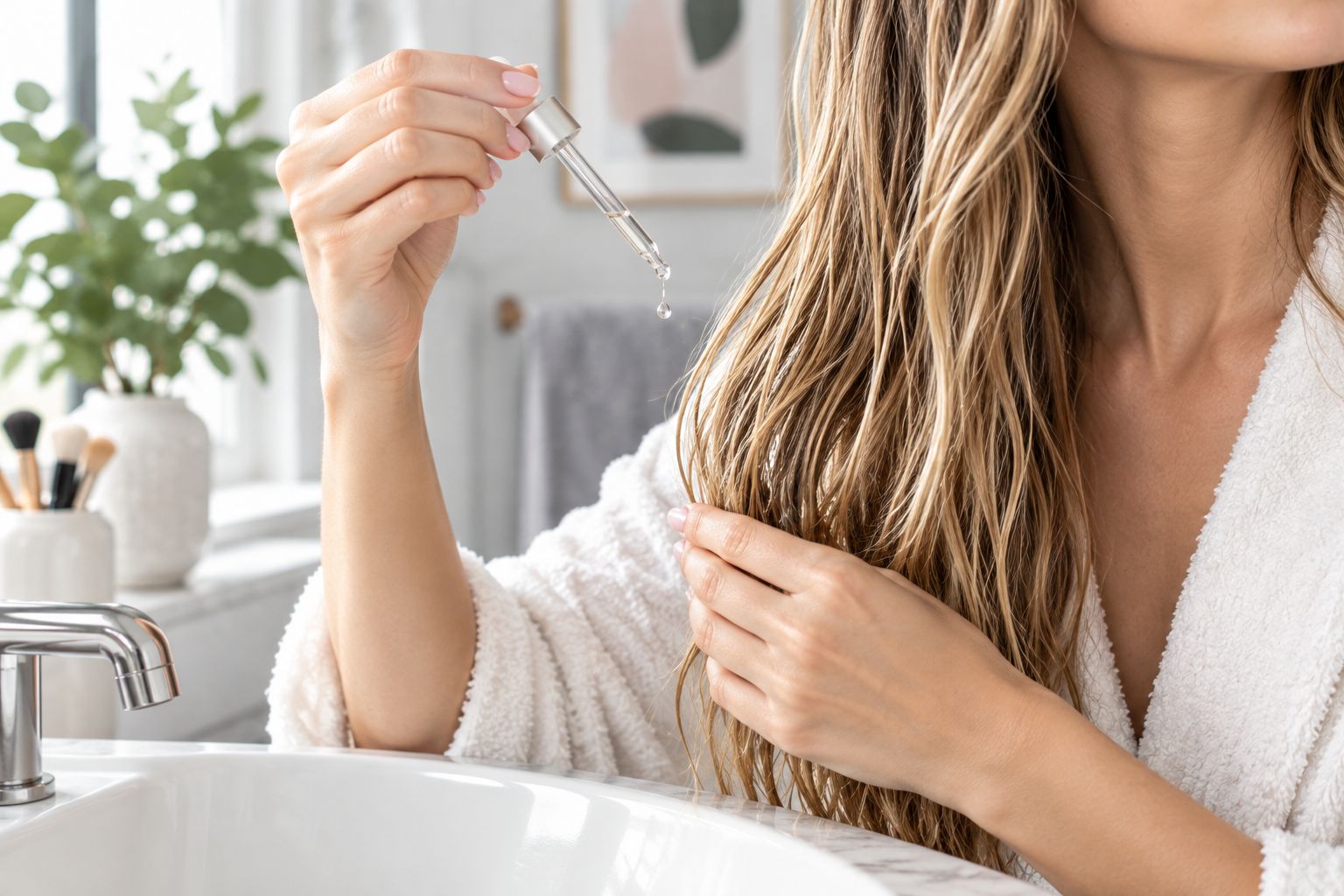
3. Apply the glaze drops to damp mid-lengths only
This is the step most people get wrong, and it's the difference between glassy shine and a weighed-down mess.
- Start with 2-3 drops for shoulder-length fine hair, adding one drop per extra few centimetres
- Rub the product between your palms first, then smooth it through — never drip it directly onto hair
- Apply from ear-level down, keeping it off the scalp and first two centimetres of root
- Comb through with a wide-tooth comb to distribute evenly before styling
4. Boost tone and shine with a colour-depositing gloss
If your hair is coloured, a glaze drop alone won't fix fading tone — pair it with something that deposits pigment.
- Use a gloss toner every 4-6 weeks to refresh cool or warm tones between salon visits
- Apply a colour-depositing mask once a fortnight if brassiness shows up faster than that
- Always patch-test a new toner shade on a hidden section first
- Rinse toner as soon as the target shade appears — leaving it longer than directed shifts the tone further than planned
5. Lock the shine in against New Zealand humidity
Glaze shine fades fastest in damp coastal air, which describes most of the country for a good chunk of the year.
- Finish styling with a light anti-humidity mist rather than a heavy hairspray
- Avoid touching hair repeatedly through the day — oil transfer from hands dulls the glaze faster
- Sleep on a smooth pillowcase to reduce friction that roughs up the cuticle overnight
- Reapply a single drop to the ends only if hair looks flat by the second day
6. Rebuild strength so gloss has something to reflect off
Glaze drops shine up the surface, but damaged, porous hair scatters light no matter what you put on it.
- Run a weekly protein or bond treatment if hair snaps or feels rough when dry
- Choose a sulfate-conscious shampoo and conditioner pair suited to your hair type rather than switching formulas weekly
- Trim split ends every 8-10 weeks — split ends catch light unevenly and look dull regardless of product
- Cut back heat styling to 2-3 times a week while rebuilding strength
7. Know when to switch from drops to a heavier mask
Glaze drops are a maintenance step, not a repair treatment — recognise when your hair has moved past what a lightweight formula can fix.
- Hair feels dry and brittle even right after washing: switch to a weekly mask
- Ends are visibly frayed or see-through: a bond-repair treatment should come first
- You've bleached or lightened more than two levels recently: prioritise repair over shine for 4-6 weeks
- Glaze drops stop making a visible difference after two weeks of consistent use: the issue is deeper than surface shine
Gloss treatments compared: which one fits your hair
| Option | Best for | Key limitation |
|---|---|---|
| Gloss absolu-style glaze drops | Fine or oily-prone hair wanting daily shine | Doesn't fix colour fade or deep damage |
| Gloss toner | Colour-treated hair needing tone refresh | Needs precise rinse timing to avoid over-toning |
| Leave-in protein treatment | Fine hair needing shine plus light strength | Richer feel than pure glaze drops |
| Colour-depositing mask | Faded fashion colours or blondes | Shorter-lasting than a salon toner service |
| Anti-humidity finishing spray | Locking in shine on humid days | Doesn't add shine on its own — it's a finisher |
Verdict: for fine, oily-prone hair in 2026, gloss absolu glaze drops win as the daily shine step, but colour-treated hair needs a gloss toner in the routine too — one product doesn't cover both jobs.
Common mistakes fine and oily-prone hair makes with gloss treatments
- Applying glaze drops to the scalp: this is the single fastest way to look greasy by midday — keep drops off the first two centimetres of root.
- Skipping the lightweight shampoo step: applying gloss over yesterday's product buildup blocks shine before it has a chance to show.
- Layering glaze drops under a heavy oil or serum: stacking two shine products cancels the lightweight benefit and flattens hair anyway.
- Ignoring colour fade: using only glaze drops on toned or coloured hair looks shiny for a day, then reverts to brassy or dull within a week.


Zilion NZ carries these alongside the Danger Jones and Davroe options already covered, so building a full lightweight-gloss routine doesn't mean shopping around multiple sites.
FAQ
What are gloss absolu glaze drops used for?
Gloss absolu glaze drops add shine to hair by sitting on the cuticle rather than soaking into the shaft, which suits fine or oily-prone hair that goes flat under heavier oils. They work fastest on damp, freshly washed mid-lengths.
Can I use gloss glaze drops on coloured hair?
Yes, but glaze drops alone won't fix fading tone. Pair them with a gloss toner every 4-6 weeks to keep colour looking fresh between salon visits.
How many drops should I use for fine hair?
Start with 2-3 drops for shoulder-length fine hair and add one drop per extra few centimetres of length. Applying more than that is the most common cause of weighed-down results.
Is gloss absolu glaze drops the same as a gloss toner?
No. Glaze drops add surface shine to any hair type, while a gloss toner deposits colour pigment to correct or refresh tone on lightened or coloured hair.
Do glaze drops work on thick or curly hair?
They can, but thick or coarse hair usually needs a richer oil-based treatment to see a visible difference. Glaze drops are built for fine or oily-prone hair first.
How often should I apply gloss glaze drops?
Daily use on damp mid-lengths is fine for most fine hair types in 2026, since the formula is lightweight enough not to build up. Oily-prone hair may only need it every second wash day.
What's the difference between a leave-in treatment and glaze drops?
A leave-in treatment like a protein formula adds shine plus some strength and moisture, while pure glaze drops focus purely on surface shine with almost no added weight.
One last thing
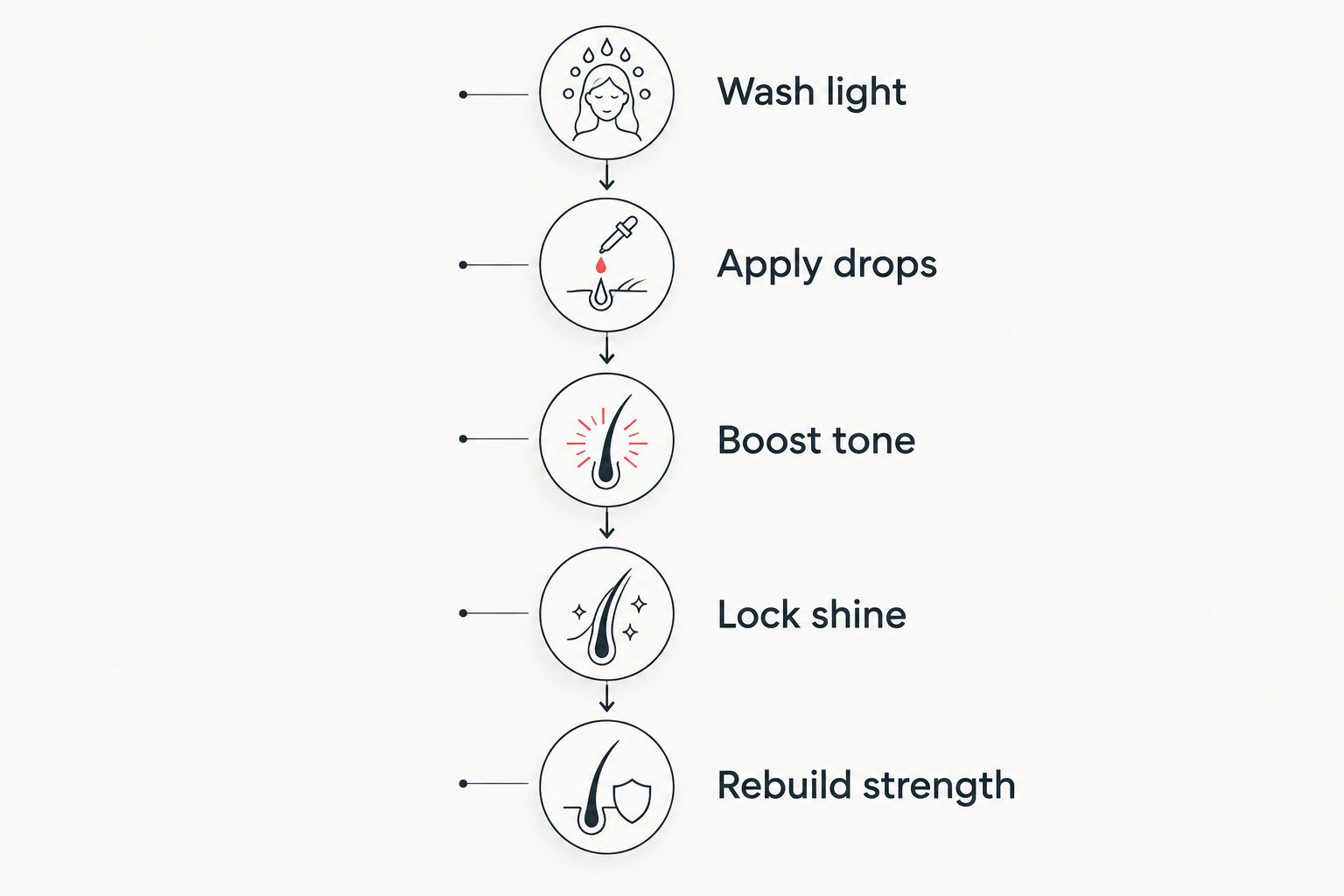
The order you apply products in matters more than which specific gloss you buy — glaze drops on unwashed, product-heavy hair will never look as shiny as the same drops on clean, damp mid-lengths. Get the sequence right (wash light, apply damp, lock in with a light mist) before spending on a second or third shine product.


