

Wella Ultimate Repair Miracle Hair Rescue is a leave-in spray for chemically and heat-damaged hair, built to detangle, seal split ends and add shine straight after a wash — read on for the routine that gets the most out of it in 2026.
- Wella Ultimate Repair Miracle Hair Rescue is a leave-in detangling spray, best used on damp hair before heat styling.
- Pair it with the Wella Professionals Ultimate Repair Mask weekly for bond-level repair on bleached or over-processed lengths.
- Colour-treated hair needs a sulphate-gentle shampoo first — skip this step and the spray works twice as hard for half the result.
- Zilion NZ stocks the full Wella Professionals NZ repair line, including the Fusion Intense Repair pairing for fragile strands.
Why hair rescue treatments matter for damaged hair
Damaged hair — from bleaching, box dye, or a straightener used daily — loses the outer cuticle layer that keeps moisture in and breakage out. Once that layer is compromised, ordinary conditioner sits on the surface instead of doing anything structural.
Colour-treated and heat-styled hair in particular needs a product that works on wet strands straight out of the shower, because that's the window where hair is weakest and most prone to snapping during brushing. A leave-in rescue spray like Wella Ultimate Repair Miracle Hair Rescue is designed for exactly that window — it's not a substitute for a wash-day mask, it's the step in between.
New Zealand's summer sun, chlorinated pools and salt water add more stress on top of chemical damage, which is why a repair-specific routine matters more here than a generic "add some conditioner" approach.
“If your hair snaps before it stretches, it needs bond-level repair, not just a leave-in spray.”
How to build a repair routine around Miracle Hair Rescue
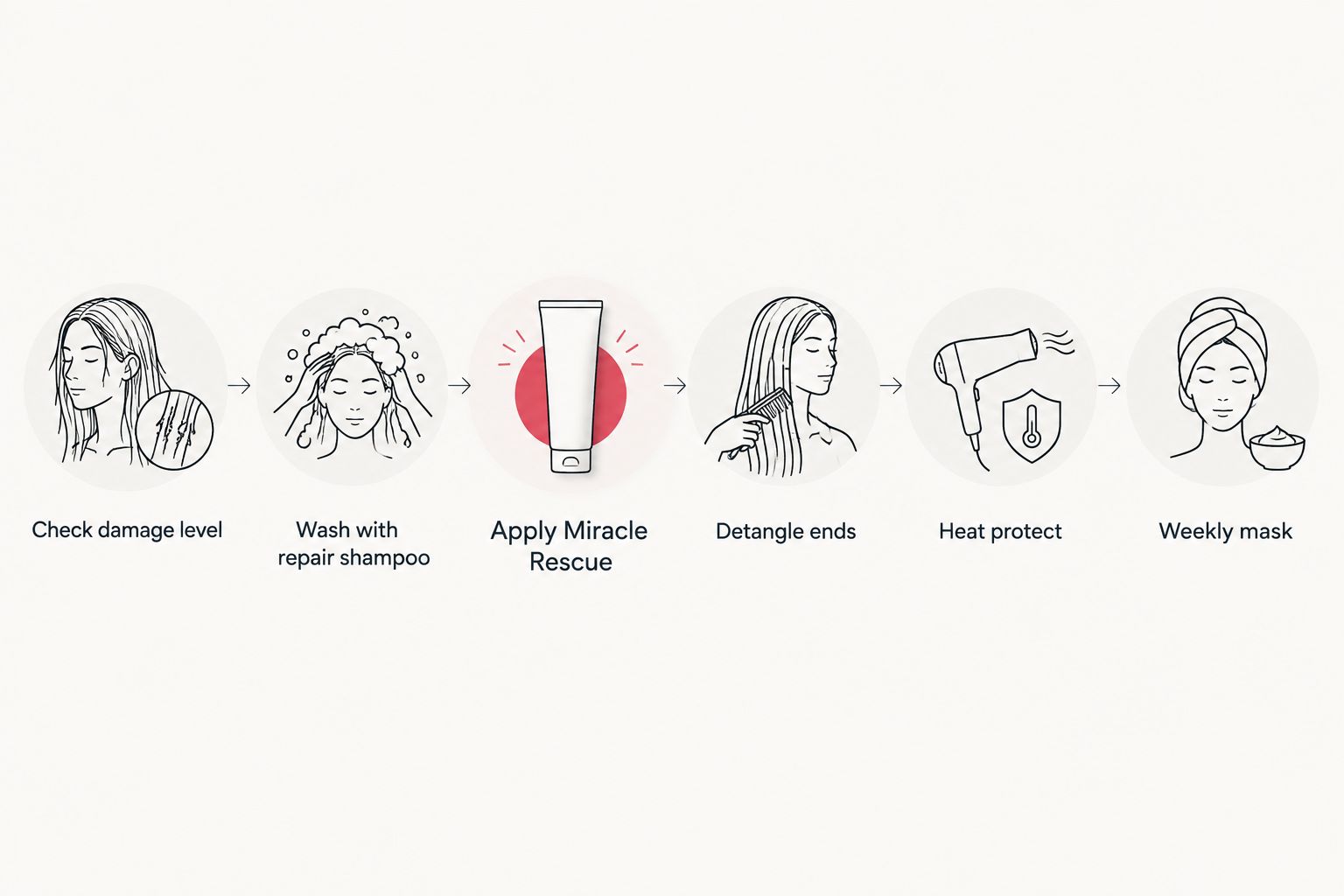
Check how damaged your hair actually is
Before buying anything, work out whether you're dealing with surface dryness or structural damage — the fix is different.
- Stretch a damp strand: if it snaps rather than springs back, that's bond-level damage
- Check for split ends along the last 5-10cm — a sign of cuticle wear from heat or friction
- Note how many chemical services you've had in the last 12 months (bleach, perm, keratin)
- Feel for straw-like texture when dry — this points to moisture loss, not just breakage
Wash with a repair-matched shampoo and conditioner
A repair spray only works as well as the wash underneath it. Stripping shampoos undo the job before it starts.
- Use a sulphate-gentle shampoo built for chemically treated hair, such as Fusion Intense Repair Shampoo
- Follow with a matching conditioner, not a random one from the cupboard
- Wash in lukewarm water — hot water opens the cuticle further and worsens breakage
- Skip daily washing on damaged hair; three to four washes a week is usually enough
Apply Wella Ultimate Repair Miracle Hair Rescue on damp hair
This is the step the product is named for. Towel-dry until hair stops dripping, then work the spray through mid-lengths to ends before detangling.
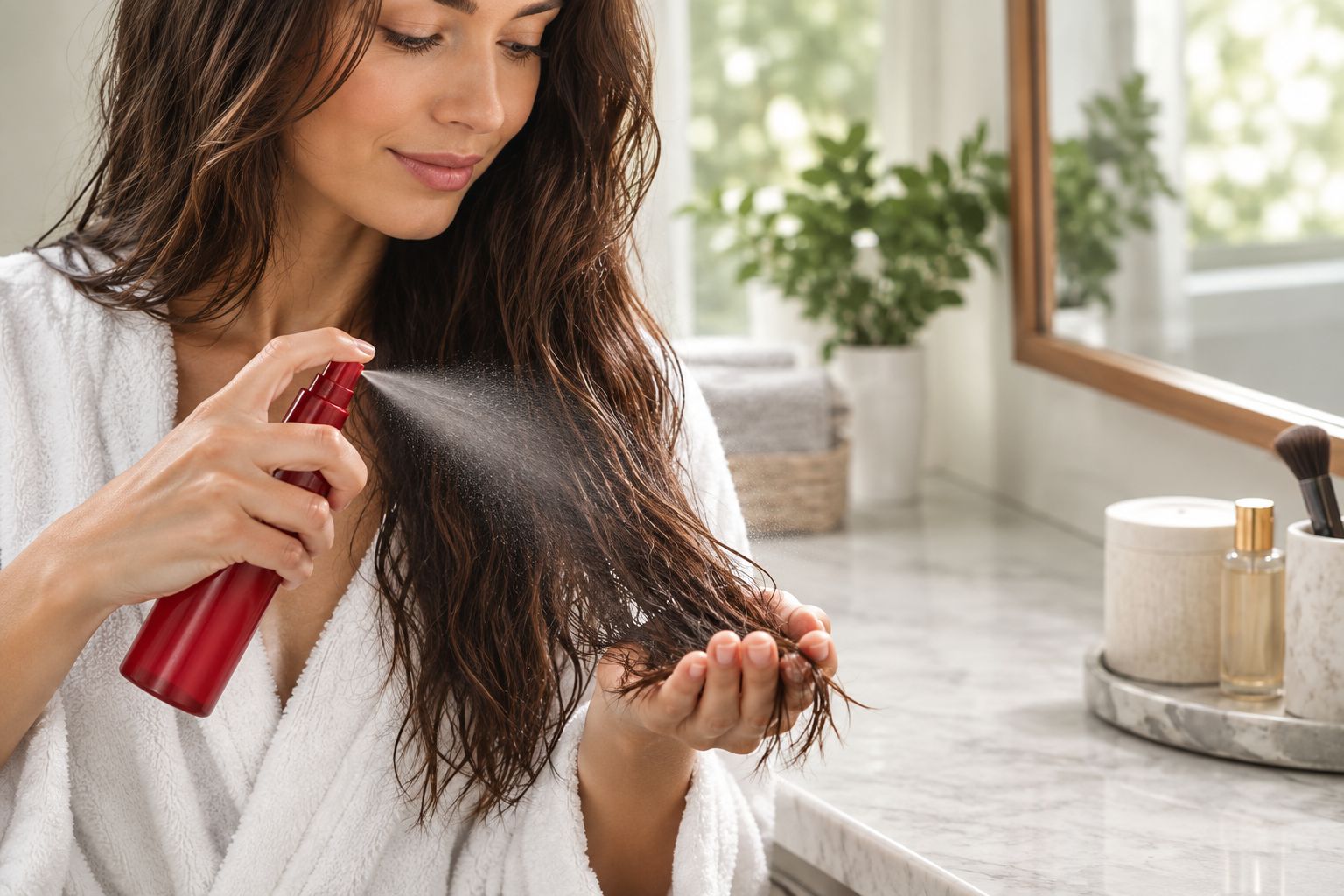
- Focus product on the ends and mid-lengths, avoiding the roots and scalp
- Comb through with a wide-tooth comb while the spray is still wet
- Reapply lightly to dry ends later in the day if hair feels rough or static
- Don't skip this step before heat styling — it's doing a different job to your heat protectant
Detangle from the ends up
Brushing damaged hair from the roots down drags every knot through the weakest, most damaged part of the strand.
- Start detangling at the very ends and work upward in small sections
- Use a wide-tooth comb or a detangling brush, not a fine-tooth comb
- Never brush hair dry if it's prone to breakage — detangle on damp hair only
- Hold the section above a knot to take tension off the root while you work it loose
Add heat protection before styling
Miracle Hair Rescue is not a heat protectant on its own — treat it as the repair step, and add protection separately before straighteners or a blow-dry.
- Apply a dedicated heat protectant spray after the rescue treatment has been combed through
- Keep straighteners under 180°C on colour-treated or bleached hair
- Use the lowest effective heat setting rather than the highest available one
- Let hair air-dry to 80% before using any hot tool
Follow with a weekly repair mask
A leave-in spray manages daily wear; it doesn't replace a deep, rinse-out treatment for genuinely damaged lengths.
- Apply the Wella Professionals Ultimate Repair Mask once or twice a week on towel-dried hair
- Leave it on for the time stated on the pack before rinsing thoroughly
- Concentrate the mask on ends, not roots, to avoid weighing hair down
- Space it out to weekly if hair starts feeling overly soft or limp
Track progress and adjust frequency
Repair routines aren't set-and-forget — damage levels change as new growth comes through and old colour fades.
- Reassess the strand-stretch test every four to six weeks
- Cut back the spray to every second wash once breakage visibly improves
- Increase mask frequency temporarily after a fresh bleach or colour service
- Book a trim every 8-10 weeks to remove ends that are past repairing
Comparing your options for damaged hair
| Option | Best for | Key limitation |
|---|---|---|
| Wella Ultimate Repair Miracle Hair Rescue | Daily detangling and pre-styling protection on damaged lengths | Doesn't deliver deep repair on its own — needs a mask alongside it |
| Wella Professionals Ultimate Repair Mask | Weekly deep repair on very damaged or bleached hair | Rinse-out only, doesn't protect hair between washes |
| Wella Professionals Fusion Intense Repair Shampoo & Conditioner | Fragile, breakage-prone hair needing bond-level care every wash | Works best paired with the rest of the Wella Professionals Fusion range rather than mixed brands |
| Wella Professionals Invigo Nutri-Enrich Deep Nourishing range | Dry ends without severe chemical damage | Lighter formula, not built for heavy breakage or bleach damage |
Verdict: Wella Ultimate Repair Miracle Hair Rescue is best for hair that's damaged but not severely broken down — pair it with the Ultimate Repair Mask if breakage is still visible after a few weeks.
Common mistakes with damaged hair routines
- Skipping the mask and relying on the spray alone — a leave-in treatment manages daily wear, it can't rebuild what a weekly mask does
- Using hot water on colour-treated hair — it strips colour faster and opens the cuticle the repair routine is trying to close
- Brushing dry, damaged hair from root to tip — this is the single biggest cause of visible breakage on over-processed hair
- Over-applying leave-in product to the roots — it weighs hair down and can leave it looking greasy within a day
- Ignoring heat protectant because "the rescue spray already protects it" — they do different jobs and both are needed before styling tools
If targeted vials or ampoule-style treatments suit your routine better than a spray, both options below are worth a look for supplementing a repair routine.


FAQ
What does Wella Ultimate Repair Miracle Hair Rescue do?
It's a leave-in spray that detangles damp hair, seals split ends and adds shine before styling. It works on chemically or heat-damaged hair as a daily step, not a replacement for a weekly mask.
How often should I use Wella Ultimate Repair Miracle Hair Rescue?
Use it after every wash on damp hair, roughly three to four times a week depending on your wash routine. Reapply lightly to dry ends if hair feels rough during the day.
Is Wella Ultimate Repair Miracle Hair Rescue good for colour-treated hair?
Yes, it's built for chemically damaged hair, which includes colour-treated and bleached hair. Wash with a colour-safe, repair-focused shampoo first for the best result.
Can I use Miracle Hair Rescue with the Wella Ultimate Repair Mask?
Yes, they're designed to work together — the mask handles weekly deep repair while the spray manages daily detangling and styling prep. Use the mask once or twice a week and the spray after every wash.
How is Miracle Hair Rescue different from a leave-in conditioner?
It's formulated specifically for damaged hair repair rather than general moisture, focusing on detangling and split-end protection. A standard leave-in conditioner is lighter and less targeted at structural damage.
Does Wella Ultimate Repair work on bleached hair?
Yes, bleached hair is one of the main damage types the range targets. Pair the mask and spray together for the most noticeable improvement on very porous, bleached lengths.
Should I apply it on wet or dry hair?
Apply it to damp, towel-dried hair rather than soaking wet or fully dry hair. This is when the spray detangles most effectively and absorbs before styling.
How much product should I use per application?
A light, even mist through mid-lengths and ends is enough for most hair lengths. Add a touch more to the driest sections rather than saturating the whole head.
One last thing
The order of operations matters more than the product itself: apply Miracle Hair Rescue on damp hair before detangling, not after styling, or you're spraying finished hair instead of protecting it while it's still vulnerable. If breakage hasn't visibly improved after four to six weeks of consistent use, the issue is structural and needs the Ultimate Repair Mask added in, not a heavier spray application. Zilion NZ carries the full Wella Professionals NZ repair line so you can build the mask-and-spray combination in one order rather than piecing it together from different ranges.


