

Brides-to-be: bridal hair care NZ is a routine of cleansing, conditioning and styling practice aimed at a wedding look that suits your hair and venue. In 2026, choose care products for your hair's needs, then test the finished style before the ceremony. Zilion is an online NZ option for hair care and tools, but it cannot replace a hands-on styling trial.
- Bridal hair care NZ starts with your hair's needs, not an entirely new routine.
- Zilion suits NZ brides buying hair care and styling supplies; a stylist is better for hands-on help.
- Test your full hairstyle with its accessories before your 2026 wedding.
- Choose conditioning, smoothness or volume by hair needs, then check each product's directions.
Why bridal hair care matters for brides-to-be
Your usual routine only has to work for an ordinary day. A wedding hairstyle also has to accommodate accessories, photographs, changing locations and hours between the ceremony and the last dance. The question is not simply whether your hair looks good when you leave the chair; it is whether the style still feels comfortable and looks the way you want later.
In New Zealand, check the actual setting rather than planning around a generic wedding look. A coastal ceremony, a sheltered indoor reception and an outdoor venue call for different decisions about loose pieces and hold. If an updo is on your shortlist, use this guide to curling irons for bridal updo hairstyles to plan what to discuss or practise at your trial.
The best starting point for a 2026 wedding is a record of what already works. Keep the cleanser your scalp tolerates and the styling method that holds. Change one part of the routine at a time so you can tell what helped and what did not.
Build your 2026 bridal hair care routine
Assess your hair before buying anything
Look at your hair as it is now, not as it appears in an inspiration photo. Note whether your scalp feels comfortable after washing, whether the ends feel dry, how much lift your hair holds and what happens when you style it. Those observations give you a shopping brief and a more useful conversation with your stylist.
Your style goal should fit your hair and your plans. If you want your hair down for the ceremony but up for dancing, ask who will make that change and when. If you want to keep your natural texture, trial it rather than assuming a polished version of someone else's hair will suit you better.
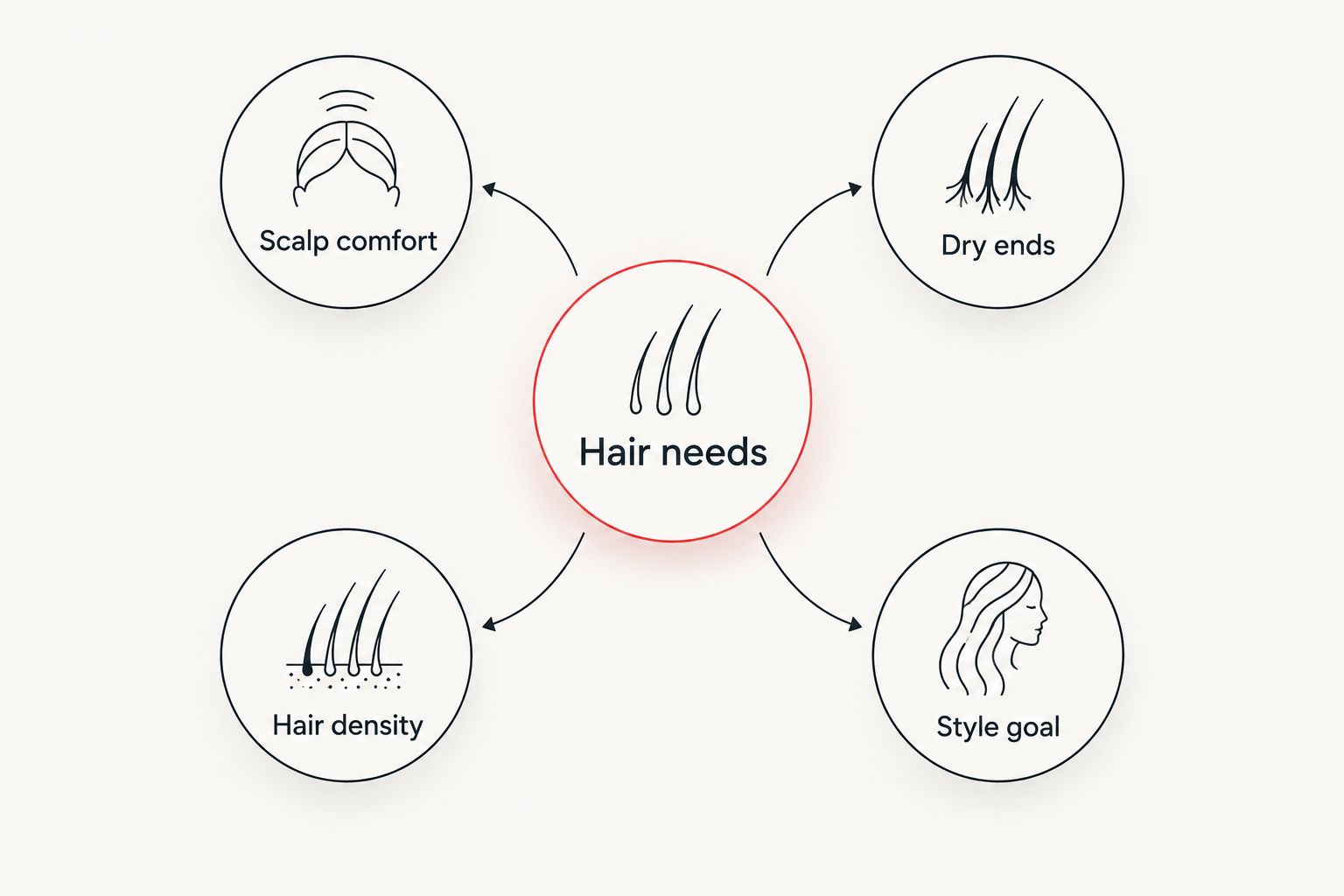
- Check scalp comfort: write down any itching, tightness or oiliness after your usual wash.
- Inspect dry ends: identify the sections that need the most conditioning or a trim.
- Note hair density: photograph your hair loose and tied back to discuss the shape you want.
- Define your style goal: save examples of the front, sides and back, not just one angle.
Plan your appointments around the style
Decide which jobs require a professional and which you can do yourself. A stylist can assess whether an accessory will sit securely and show you how the finished shape looks from behind. At home, you can document what happens between washes and practise the everyday preparation that leads into the style.
If you colour your hair, tell your colourist what you plan to do with it on the day. Hair worn up can reveal sections that are less visible when it is down. Avoid making a major colour decision solely from a photograph: discuss the starting shade, maintenance and finished hairstyle together.
A 2026 wedding plan does not need a rigid countdown. It needs enough space to see the result of a trim, colour appointment or trial before deciding whether to change anything else. Put those decisions on your calendar now, then leave the final days for familiar care.
- List the appointments: include trims, colour services and a hairstyle trial where relevant.
- Bring useful photos: show the accessory and views of the style from several angles.
- Ask about preparation: confirm how the stylist wants your hair washed and dried for the trial.
- Keep notes: record what was used and how the style felt later in the day.
Condition according to what your hair needs
Start with the manual fix: distribute your existing conditioner through the lengths, detangle gently and follow its directions before adding another product. If the ends still feel rough or your usual routine is not giving you the finish you want, consider a treatment that fits your hair. More product is not automatically better, especially if you want lift at the roots.
Nak Hair Signature Ultimate Treatment 1000ml is a treatment option at Zilion for brides who want a dedicated conditioning step. Its limitation is simple: a treatment cannot tell you whether your chosen updo will hold or whether a trim is due. Check its directions, try it before your trial and assess the result on your own hair.
If your scalp feels uncomfortable, focus on that separately rather than applying a lengths-focused treatment at the roots. Persistent scalp symptoms need advice suited to the cause; a wedding shopping list is not a diagnosis.
- Use what you own first: apply your current conditioner evenly through the lengths.
- Add one treatment at a time: follow the label and judge the result after styling.
- Protect root volume: keep heavier conditioning away from the roots if lift matters to your look.
- Record the finish: note softness, movement and whether your style still holds.
Trial the complete look, not just the curls
Wear the veil, comb or other accessory you intend to use. A curl that looks good loose does not answer whether pins grip comfortably, whether the front sits as you want in photos or whether the accessory catches when you move. A trial is your chance to make those decisions without ceremony-day pressure.
Take photos in lighting similar to your venue and again after wearing the style for part of a normal day. Check the front, both sides and back. Tell your stylist if a pin hurts, the style feels heavy or a loose section repeatedly falls into your face. Comfort matters because you will be wearing the result, not just photographing it.
If you are doing your own hair, practise the entire sequence, including drying, sectioning and placing accessories. Ask someone to take the back-view photo. Do not judge a DIY style solely by how it looks in the bathroom mirror immediately after finishing.
- Bring the real accessories: test their placement and how securely they sit.
- Photograph every angle: include front, sides and back in your review.
- Wear the style: check comfort and shape after you have moved around.
- Repeat a DIY trial: practise the full sequence rather than only its easiest section.
Match finishing products to your venue
First decide what needs control. Hair worn down in wind has a different problem from an indoor updo with short flyaways. Ask your stylist what they used at the trial, or test a small amount of your existing finishing product during a DIY practice. The aim is a finish you like without making your hair feel unlike itself.
For an outdoor or humid setting, Osmo Guardian Angel Anti-Humidity Spray 250ml is a relevant finishing option. Best for: brides who want to test an anti-humidity product as part of their trial. Its limitation is that a spray cannot fix unsuitable accessory placement or replace a style that has not been tested in similar conditions.
Do not make your first full application on the wedding morning. Test the finish, scent and feel beforehand, then keep the products that worked in the trial consistent on the day.
- Check the setting: note whether wind, humidity or indoor heat affects your chosen style.
- Test your usual product: see whether it gives enough control before changing it.
- Follow spray directions: use the application method stated on the product.
- Review the result: check hold and feel after wearing the finished style.
Practise the tools you will actually use
If you will style your own hair, technique matters more than buying another tool at the last minute. Practise drying in sections, directing airflow away from the roots when smoothing and allowing each section to settle before handling it again. Use heat according to the tool's instructions and your hair's condition.
A round brush is useful when your trial calls for a shaped blow-dry rather than an updo built entirely from curls. The Kent Pure Flow 45mm Ceramic Round Brush is one brush option for that practice. Best for: brides working on a blow-dried shape. Its limitation is that a round brush alone will not create the finished look; you still need to practise sectioning and drying.
If someone else is styling your hair, ask which parts of your home routine to keep. You do not need to recreate the stylist's entire kit. You do need to arrive with hair prepared in the way agreed at the trial.
- Practise sectioning: work through the areas you find hardest to reach.
- Follow tool directions: adjust use to your hair and the manufacturer's guidance.
- Photograph the result: compare your practice with the style you chose.
- Confirm handover: ask your stylist what to do, and avoid, before the appointment.
Prepare a small touch-up plan
Your trial should tell you what needs attention later in the day. If nothing shifts, keep the kit small. If one loose section needs repositioning, pack what your stylist recommends and identify someone who can help. This is more useful than carrying several untested sprays and hoping one works.
Make the plan practical for your clothing and venue. Decide where the kit will be kept, who has it during photographs and whether you can reach the back of your hairstyle without disturbing an accessory. If you expect to change your hair between the ceremony and reception, schedule that as a styling job rather than a casual touch-up.
For a 2026 wedding, consistency is the safest final step: use the washing, drying and finishing method that worked in your trial. Follow any different preparation instructions your stylist gives you.
- Pack only tested items: include the pins, comb or finishing product your trial called for.
- Assign a helper: choose someone who knows where the kit is kept.
- Plan style changes: set aside time and help if the look will change.
- Follow trial notes: repeat the preparation that produced the result you liked.
Compare bridal hair care options
These options solve different parts of bridal hair care NZ planning. In 2026, choose according to the work you need done, not the size of the kit.
| Option | Best for | Main advantage | Key limitation |
|---|---|---|---|
| Existing home routine | Brides whose hair already responds well to familiar products | Lets you observe what works before buying anything | Does not test a new wedding style on its own |
| Professional hairstyle trial | Brides wearing an updo, veil or unfamiliar accessory | Tests shape, placement and comfort with hands-on help | Requires an appointment and clear preparation instructions |
| DIY full-style practice | Brides planning to style their own hair | Shows which steps you can repeat yourself | Back sections and accessory placement can be difficult alone |
| Zilion hair care and tools | NZ brides sourcing products for a planned routine | Lets you choose care and styling supplies by the job they need to do | Products cannot replace a trial or personalised stylist advice |
Choose a trial if the finished style is the question. Choose products only after you know what your hair or the style needs. You can combine a salon trial with a simple home routine without buying an entirely new set of products.


Common mistakes brides-to-be make
- Changing the entire routine at once. If you switch shampoo, treatment and finishing spray together, you cannot tell which change affected the result. Test one addition at a time.
- Trialling without the accessories. A hairstyle trial without the actual veil or comb leaves placement and comfort unresolved. Bring the pieces you plan to wear.
- Judging the style only when it is finished. Take another look after wearing it. A later photo reveals what an immediate mirror check cannot.
- Choosing products from a look alone. A smooth blow-dry, an updo and a natural-texture style need different preparation. Decide on the style before filling a basket.
- Ignoring the day-of handover. If you expect a change between ceremony and reception, arrange who will do it and what they need. A touch-up kit is not a second styling appointment.
FAQ
What is the best bridal hair care NZ routine?
The best bridal hair care NZ routine is the one that suits your scalp, hair condition and chosen hairstyle. Keep what already works, test any changes and trial the finished look before the wedding.
When should I start preparing my hair for a 2026 wedding?
Start when you choose your likely hairstyle so you have time to assess your hair and arrange any appointments. The key deadline is a full trial early enough to change a style you dislike.
Do I need a hair trial if I am doing my own wedding hair?
Yes, a full DIY practice shows whether you can repeat the style, secure its accessories and reach the back of your hair. Photograph it after finishing and again after wearing it.
Should I wash my hair on the wedding morning?
Wash your hair on the schedule that worked at your trial or follow your stylist's preparation instructions. Do not assume that freshly washed or unwashed hair will suit every style.
What should I bring to a bridal hairstyle trial?
Bring the veil or hair accessories you plan to wear and photos showing the style from several angles. Tell your stylist about your venue, your hair routine and any discomfort during the trial.
How do I choose products for a humid wedding venue?
Test an anti-humidity finishing product with the complete style before the wedding. A spray addresses finishing, but it cannot correct an accessory that slips or a style that does not suit your hair.
Is a treatment more useful than a new styling tool?
A treatment addresses a conditioning step, while a styling tool helps create the shape you plan to wear. Choose according to the problem you found during preparation rather than buying both by default.
One last thing
The most useful result of a hairstyle trial is not the photo you take at the appointment. It is knowing what the style feels and looks like later, when you have moved around and stopped thinking about your hair. Make that later check part of your 2026 plan.
For Zilion hair care shoppers, the next move is specific: identify the missing step in your routine, choose a product for that job and test it before the wedding. Keep the products and preparation that already work.


