

Dry-haired New Zealand shoppers' mask routine is a wash-day approach aimed at making rough lengths easier to manage. If you're considering nak replends moisture mask in 2026, use Zilion's guide to dry and damaged hair to identify the concern, then check the mask's own label before adding it to your routine.
- For nak replends moisture mask, follow the product label rather than directions for a different NAK treatment.
- Zilion hair treatments include Nak Hair Signature Ultimate Treatment 1000ml, a separately named option to compare.
- Apply a treatment where your hair needs it, then judge the result after rinsing and drying.
- A mask can improve how dry lengths feel, but it cannot permanently repair split ends.
Why nak replends moisture mask matters for dry-haired shoppers
A search for this mask has a specific purpose: you want to know whether it belongs in your dry-hair routine and how to use it. The first decision is not how much product to buy. It is whether your hair feels dry along the lengths, breaks during handling, or becomes coated and heavy after conditioning. Those experiences call for different adjustments.
For New Zealand shoppers in 2026, the product name also matters. NAK Replends Moisture Mask and Nak Hair Signature Ultimate Treatment have different names. Do not assume they have the same formula, instructions or role simply because both are hair treatments associated with NAK. NAK Replends Moisture Mask is best for shoppers who can check its own directions and want a dedicated mask step; it is not a substitute for diagnosing persistent breakage.
Start with what you can observe during an ordinary wash. That keeps the routine useful whether you already own the mask or are comparing alternatives before you shop.
Build a dry-hair routine around a mask
Check where your hair actually feels dry
Run your fingers through clean, dry hair before adding another treatment. Rough ends, tangles at the mid-lengths and a tight-feeling scalp are not interchangeable concerns. A mask applied to the lengths targets a different area from a scalp-care product. Likewise, hair that feels coated can need a change to the wash routine rather than more conditioning.
Make a short note after your next wash: where does the roughness start, and does it return as soon as the hair dries? Use that observation to decide where to apply a treatment. If strands are splitting or breaking, a mask can make them easier to handle, but it does not join damaged strands back together.
- Feel the roots, mid-lengths and ends separately once hair is fully dry.
- Check whether tangles form mainly at the ends or throughout the hair.
- Look for visible splits rather than treating every rough end as simple dryness.
- Note whether hair feels heavy after your current conditioner.
Read the product directions before changing your schedule
The label decides how to use a specific mask. Do not borrow a timing or frequency recommendation from another NAK product, even one with a similar name. Check whether the instructions call for use on clean hair, where to apply it, how long to leave it on and whether to follow with conditioner. Those details determine where the mask fits in your wash.
This is especially useful when shopping online in 2026: a product title tells you what the item is called, not everything about its use. If the directions are not clear before purchase, confirm them on the product packaging before your first application. That is more dependable than treating a general hair-mask routine as a substitute for the manufacturer's instructions.
- Find the application area and leave-on time on the label.
- Check whether the mask is intended to be rinsed out.
- Look for any directions about use alongside conditioner.
- Follow the stated frequency instead of setting one by guesswork.
Wash your scalp and prepare the lengths
Shampoo is the cleansing step; the mask is the treatment step. Work shampoo through the scalp first, then rinse it through the lengths without repeatedly scrubbing fragile ends. If you use styling products and hair feels coated after washing, check whether residue is getting in the way before adding more treatment.
Handle wet hair gently. It is easier to stretch and snag than dry hair, particularly when the ends already catch on your fingers. After shampooing, remove excess water in the way the mask's instructions recommend. There is no need to add extra wash steps just because you plan to use a mask. Keep the process simple enough to repeat.
- Concentrate shampoo where the scalp needs cleansing.
- Let the rinse carry cleanser through the lengths.
- Avoid piling wet hair on top of your head and rubbing it together.
- Remove excess water before treatment if the label directs you to.
Apply the mask where your hair needs it
Use the mask's directions for quantity, placement and timing. If the instructions call for application to the lengths, spread it through the rough areas rather than assuming your roots need the same amount. Start with enough to cover those sections, then check for missed patches with your fingers. Adding more product is not a replacement for even distribution.
Keep the order visible: read the label, apply to lengths if directed, then rinse thoroughly when the stated time is up. The steps below describe a general wash-day check, not product-specific instructions for NAK Replends Moisture Mask. That distinction matters when you compare masks in 2026; two tubs can serve a similar shopping need without having identical directions.
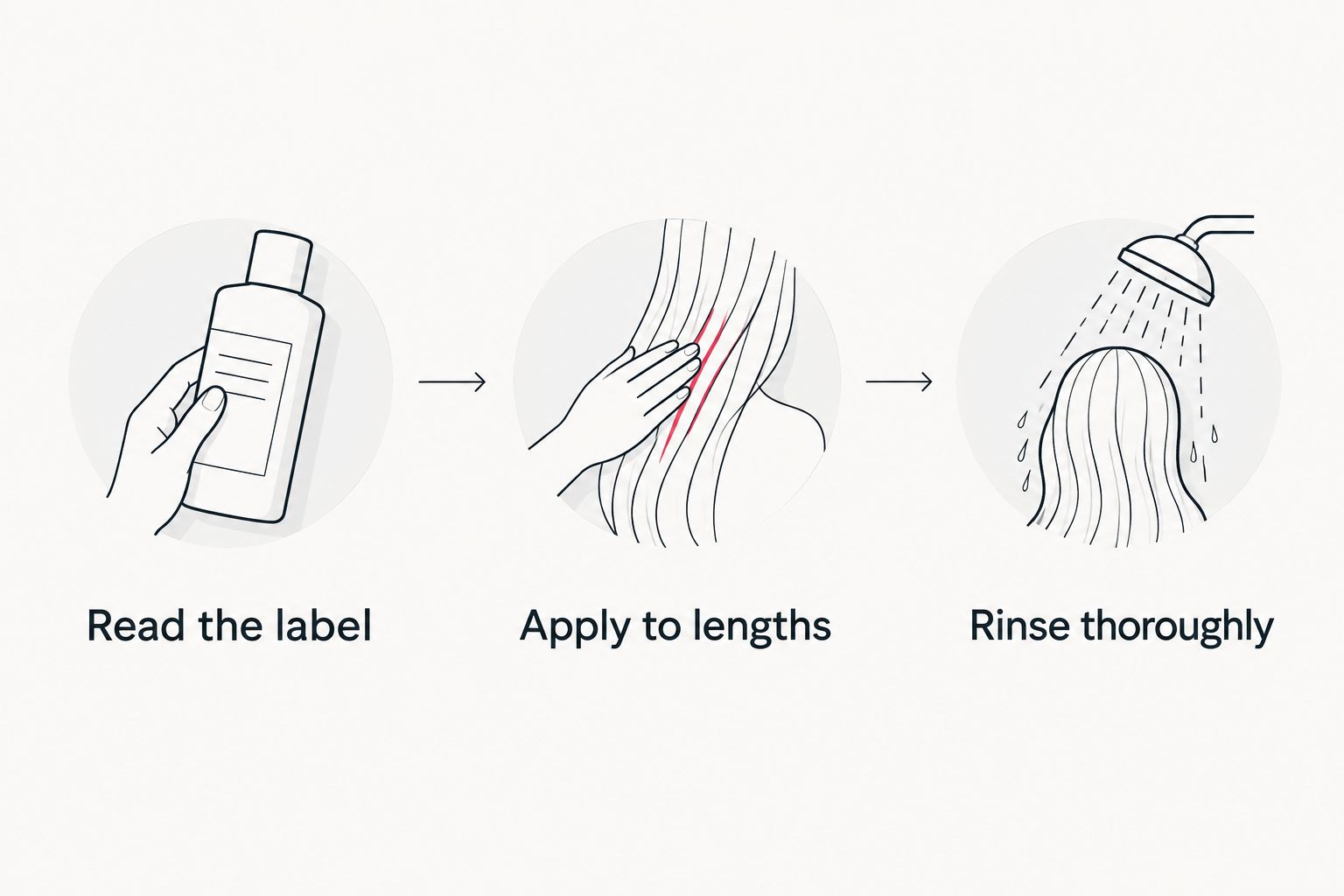
- Read the label before deciding how long to leave the mask on.
- Apply to lengths only if that matches the product directions.
- Spread the treatment evenly through the areas that feel rough.
- Rinse thoroughly at the time specified on the packaging.
Choose everyday products for the washes between masks
A mask does not have to carry the whole routine. On other wash days, shampoo and conditioner still need to leave your hair manageable without making it feel coated. If you are shopping for a new set, separate everyday wash products from an occasional treatment on your list. That prevents you from buying another shampoo when the missing step is a mask, or another mask when the daily conditioner is the problem.
Zilion haircare includes separately named NAK wash products and treatments. Compare them by their stated purpose, not by brand alone. For example, a shampoo-and-conditioner duo is an everyday wash option; a treatment is a separate decision. If your hair feels heavy after washing, change one part of the routine before changing everything at once.
- Keep your current shampoo if it cleans comfortably and leaves no unwanted residue.
- Assess conditioner by how your hair feels once fully dry.
- Decide whether you need everyday wash products or a separate treatment.
- Change one product at a time so the result is easier to judge.
Dry and detangle without adding avoidable friction
The wash is not finished when the mask is rinsed out. Rubbing hair with a towel or pulling through a knot can make already rough lengths harder to manage. Press out excess water instead of scrubbing. Begin detangling at the ends, then move upward as knots release. If a section resists, stop pulling and work through that section gently.
Heat styling is another point to review. A mask does not make repeated high-heat styling harmless, and it cannot undo a snapped strand. If you use a dryer or straightener, follow the tool and any heat-protection product directions. Judge whether the routine helps by how easily the hair separates and styles after drying, not only by how slippery it felt while wet.
- Press water out gently rather than rubbing lengths together.
- Start detangling at the ends and move upward.
- Stop pulling when a knot catches; separate it in smaller sections.
- Review your heat-styling habits alongside your treatment choice.
Review the result before adding another treatment
Give a routine a fair assessment by comparing hair after similar washes and styling. If the ends feel easier to detangle but the roots feel heavy, change where you apply conditioning products. If the lengths still snag, check whether you covered the rough sections and followed the leave-on directions. If visible splits remain, consider a trim rather than expecting a mask to remove them.
A useful 2026 shopping rule is to identify the missing job before choosing another bottle. Shampoo cleans, conditioner helps with regular wash-day manageability, and a mask supplies a separate treatment step according to its label. Buying several products that sound moisturising does not tell you which part of the routine needed attention.
- Compare the feel of fully dried hair after each treatment wash.
- Move product away from the roots if they feel coated.
- Recheck coverage and directions before adding more mask.
- Treat persistent splitting as a trimming decision, not a reason to keep layering products.
Compare dry-hair treatment options in 2026
Zilion is best for New Zealand shoppers comparing named hair treatments and wash-day products; a different NAK product is not automatically NAK Replends Moisture Mask. The table separates a mask you may already be considering from other listed options. Read each product's own directions before use. No price comparison is needed to decide whether you need a treatment, everyday wash products or both.
| Option | Best for | Key limitation |
|---|---|---|
| NAK Replends Moisture Mask | Shoppers who want to fit this named mask into an existing routine | Its own label, not another NAK product, determines use |
| Nak Hair Signature Ultimate Treatment 1000ml | Shoppers comparing a separately named NAK treatment | Do not assume it has the Replends formula or directions |
| Nak Hair Signature Nourish Duo Pack: 350ml shampoo and 350ml conditioner | Shoppers who need shampoo and conditioner together | A duo is not a substitute for checking a mask's directions |
| Wella Professionals Ultimate Repair Mask 500ml | Shoppers comparing another named mask | Different product; check its own purpose and instructions |
The single-mask and bundled options below answer different shopping needs. A mask is the more focused choice if you already like your shampoo and conditioner. A shampoo, conditioner and mask trio gives you all three product types, but it asks you to assess more than one change to your routine at once.


Common dry-hair mask mistakes
- Assuming every NAK treatment is interchangeable. Product names distinguish Replends Moisture Mask from Signature Ultimate Treatment. Use the directions for the item in your hand.
- Starting with product before identifying the problem. Rough ends, a coated scalp and visible splitting need different responses. Locate the concern before adding another conditioning step.
- Using more mask instead of distributing it evenly. Work through the sections the label tells you to treat. Check for missed areas before increasing the amount.
- Judging results while hair is still wet. Hair can feel slippery during rinsing yet difficult to manage once dry. Assess the result after your normal drying routine.
- Expecting a mask to erase splits. Conditioning can make rough ends easier to handle; it cannot permanently rejoin a split strand.
FAQ
How do I use NAK Replends Moisture Mask?
Follow the directions on the NAK Replends Moisture Mask packaging for placement, timing and rinsing. Do not substitute instructions from a different NAK treatment.
How often should I use a hair mask on dry hair?
Use the frequency stated on your mask's label. Review how your hair feels after drying before adding more treatment washes.
Is NAK Replends Moisture Mask the same as Nak Hair Signature Ultimate Treatment?
No, they are separately named treatments. Do not assume they share a formula or application directions.
Should I use conditioner after a hair mask?
Check the mask's instructions before layering conditioner after it. If your hair feels weighed down, assess whether both products are needed in the same wash.
Where should I apply a moisture mask?
Apply it where the specific product's directions say. If those directions focus on the lengths, concentrate on the rough sections rather than automatically coating the roots.
Can a hair mask repair split ends?
No, a hair mask cannot permanently rejoin split strands. It can condition rough hair, while existing splits are addressed by trimming.
What should I compare when buying a dry-hair treatment in 2026?
Compare product purpose, application directions and what you already own. A standalone mask serves a different shopping need from a shampoo-and-conditioner duo.
One last thing
You do not need to replace every wash-day product to assess one mask. Keep the products that already work for you, follow the new mask's directions and judge the result on fully dry hair. If you need a separately named treatment or wash-day products, Zilion gives you options to compare without treating them as identical to NAK Replends Moisture Mask. That is the more useful 2026 routine: decide what job is missing, then choose the product for that job.


